
From a 12-month wall plan to condition reports, these are the behind-the-scenes checks that keep your home from feeling like a storage unit.
Ask for a 12-month wall plan, not a mood board

I learned this after paying for what I thought was curation and getting something closer to interior decorating with nicer nouns. The tell was how much time we spent on a single hero wall and how little we spent on what happens when the light changes, when you host, when you get bored, and when you buy the next piece. A private curator who knows their job will happily sketch a 12-month wall plan: what rotates, what rests, what moves upstairs in summer because the afternoon sun turns brutal, and what should never be near a vent that runs all winter.
It also forces the conversation you actually need: do you want the house to read as a single point of view, or do you want it to read like a series of small, purposeful rooms? I ask for a simple deliverable. One PDF with every wall labeled, a photo of the wall as it exists, and then 2 to 4 options for that wall over the year. No fancy renderings required. If they can only sell you on the vision with glossy mockups, they usually haven't wrestled with the boring stuff like sightlines from a bar cart, glare off a frame, or the fact that your hallway art gets hit by backpacks and tote bags. My favorite curators start by walking the house at the time of day you live in it. Morning kitchen. Dusk living room. They notice the lamp you always turn on and the reflection it creates, then they plan around that reality instead of fighting it.
And yes, this is also a money move. A rotation plan slows impulse buys because you can see where a piece will live and what it bumps into. It also keeps you from paying rush shipping and last-minute installation every time you want the house to feel different for guests. If your curator can't talk in terms of calendar, light, and traffic flow, you're not hiring a curator. You're hiring a very polite shopper.
Condition reports are the part nobody posts on Instagram

The most expensive mistake I've watched friends make isn't buying the wrong artist. It's buying the right work and then being casual about its condition because everyone is excited, and the seller is charming, and the dinner reservation is in 20 minutes. A legit private curator slows the whole room down and turns the purchase into a documented object with a history. That starts with a condition report that isn't a vague email. You want photos, notes, and a clear statement of what was inspected and what was not.
Here's what I ask my curator to do before money moves: get high-res images of the front, back, and details (edges, corners, any signatures); confirm the medium and dimensions match the invoice; and request the most recent condition report from the seller or gallery, if it exists. If it's a painting, I want them to document visible cracking or damage and bring in a conservator when the cause or significance isn't clear. If it's a work on paper, I want them to look for waviness, foxing, and any hint that the sheet was previously hinged or taped. If it's a photograph, I want them to confirm the edition information and document how the print is mounted, since mounting methods can affect condition, conservation, and future treatment. None of this is sexy, but it is the difference between owning a piece and owning a problem you can't unsee.
This is where curation and wealth management start talking to each other. The report becomes part of your insurance file. It also becomes your reference point when you move homes, lend to an exhibition, or decide to resell. I keep a folder for each work that includes the invoice, the condition report, shipping documents, and installation notes (even simple stuff like "cleat height" and frame hardware). The curator who offers to set that up without being asked is worth their fee.
One more practical tell: they should be comfortable coordinating with a conservator when something looks off, not trying to play hero. If your curator hand-waves damage as "patina" without documentation, you're about to learn an expensive vocabulary word.
Make them think about lighting like a conservator
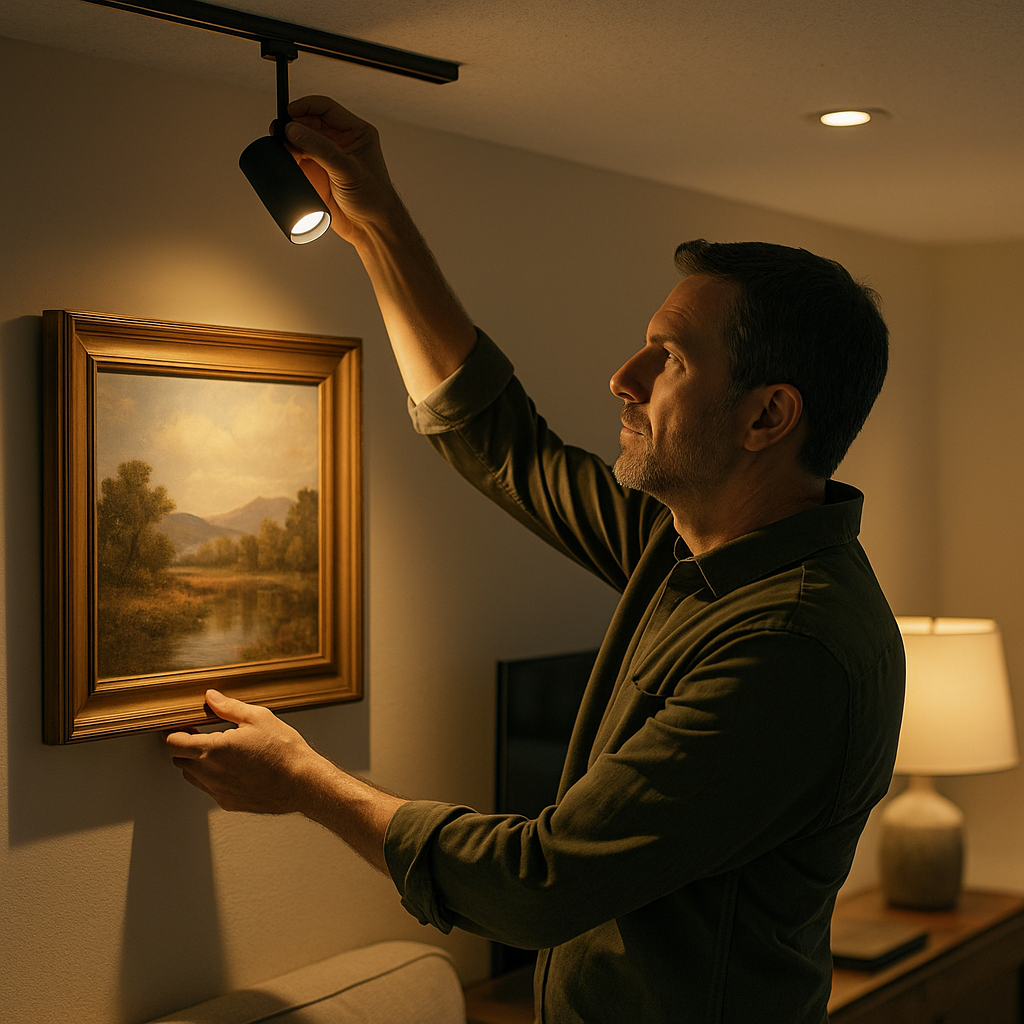
Most homes I walk into with serious work have the same quiet problem: the collection is strong, but the lighting is pure builder-grade. Overhead cans with whatever LED was on sale, a few decorative lamps, and then everyone wonders why the painting they loved at the gallery feels flat at home. A private curator who's been in enough installs will push you into a lighting conversation early, because it's the easiest way to make your collection look intentional without buying another piece.
I don't mean turning your living room into a gallery with clinical spotlights. I mean getting deliberate about light levels, beam control, glare, and how much exposure-sensitive work receives. In my own place, the biggest improvement came from swapping a mixed-bulb mess for a single, consistent temperature range, then adding directional light only where it earned its keep. For track and accent lights, my curator insisted on testing beam angles with the actual framed piece on the wall, at night, with the TV on, because that's when reflections get rude. We also walked around the room, holding a phone at eye level, to see where the glass caught the light. It's unglamorous, but it's how you stop a framed work from turning into a mirror the minute you sit down.
This is also where smart lighting can be worth the fuss. Not for party tricks, but for control. I like being able to dim art lights separately from the room when friends are over, and to set a lower level when we're watching a movie so the walls don't compete. A curator who understands homes will talk about scenes and zones, not gadgets. They'll also flag light-sensitive work so you don't park it in direct sun, where the sofa looks best. (Yes, I've done that. I moved the sofa.)
If your curator never mentions lighting, they are leaving value on the table. The right light makes a small piece feel like it belongs. The wrong light makes a museum-grade work look like decor you grabbed on the way to checkout.