
If your collection crosses the federal threshold, the tax math can hinge on the exact valuation date and the paperwork you can prove.
The valuation date is where the tax bill is born
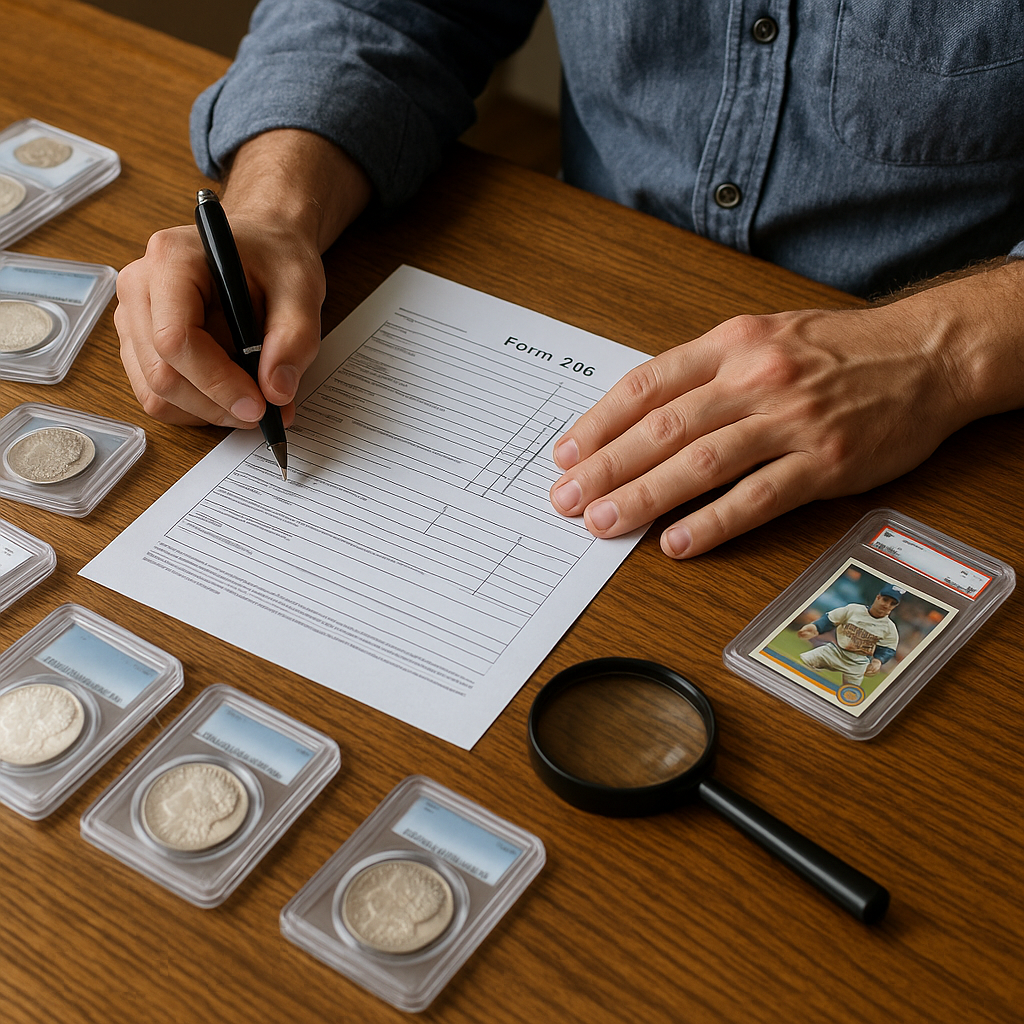
When a collection is valuable enough to matter for federal estate tax, the first argument your family will have is almost never about who gets what. It's about what it's worth, on what day, and how you can defend that number if it gets questioned. For coins, sports cards, comics, watches, guitars, even sealed LEGO sets, the urge is to grab the most flattering recent comp you can find and call it the value. That's how you end up with a Form 706 that looks neat but doesn't survive contact with reality.
Federal estate tax valuations are generally pegged to fair market value as of the date of death. There's also an alternate valuation date option (six months later) in certain situations, but it isn't a freebie and it has rules. In a market that whips around, that timing can move the needle. Think about a stack of PSA slabs when a particular rookie card is running hot, or a run of key-date Morgan dollars right after a big auction set a new high. The family can be staring at a tax number that's anchored to a moment, not to what they can sell for three months into settling the estate.
What I tell collectors to do while they're alive is boring but effective: keep a running inventory that can be understood by someone who doesn't know your hobby. Not a shoebox list that says "coins" and "cards". Use identifiers. For coins, that means date, mint mark, denomination, grade if it's certified, and the grading service on the holder. For cards, set, year, player, card number, grade, and the certification number on the label. For anything raw, note condition honestly. That inventory becomes the backbone for an appraiser to work from, and it keeps your executor from defaulting to either inflated eBay listings or a pawn-shop number because they can't tell a common issue from a scarce variation.
And here's the thing heirs don't expect: even if no federal estate tax is due because the estate is under the exemption amount, a clean valuation still matters for the tax basis the heirs inherit. If they sell later, the paperwork you leave behind can be the difference between a straightforward sale and a messy, defensive explanation of where the numbers came from.
Why your heirs need comps they can print, not just screenshots

I've watched families do the same unforced error twice: they lean on one platform's prices, and they save everything as screenshots. Then, months later, when they're trying to justify a number for estate paperwork, they're stuck with images that don't show the full listing details, the date, the grader notes, the buyer's premium, or whether the sale even completed. Screenshots feel like evidence until you need them to be evidence.
If you want your heirs to handle inheritance tax questions without turning your dining room into an episode of amateur forensics, give them a packet of comps that a skeptical third party could follow. That means a short list of comparable sales with full links, timestamps, and context. Auction results are usually better than random marketplace listings because they tend to preserve a record: lot description, images, grade, and the realized price. For coins, PCGS and NGC both have robust price resources, but an appraiser will still want to triangulate with actual realized sales, not just a guide number. For trading cards, the same logic applies: a Pop Report number and a hype cycle don't equal fair market value for the estate.
Here's the format I've used that doesn't make people groan: one page per high-value item or per small set of similar items (like a run of graded key-date coins or a binder's worth of higher-end slabs). At the top, the exact identifier from the holder label (including the certification number). Under that, three to five comparable realized sales with the sale venue, date, hammer price and buyer's premium if applicable, and any notes about why the comp is comparable (same grade, same variety, similar eye appeal). Print it and save a PDF copy. Executors change laptops. A paper file in the estate binder survives.
One more practical detail that sounds fussy until it saves you: label photos in a way that matches the inventory. If the inventory says "1909-S VDB, PCGS VF30, cert #######," the photo file name should include that cert number. When your executor is staring at 40 nearly identical slabs, that little match-up prevents the close enough mistake that turns into a tax valuation mistake.
None of this requires turning your hobby into a spreadsheet religion. It just means the person inheriting your stuff doesn't have to guess which sale record you meant, and they won't be arguing with a tax professional over a number they can't defend.
Decide now: do you want a museum-grade archive or a sellable box?
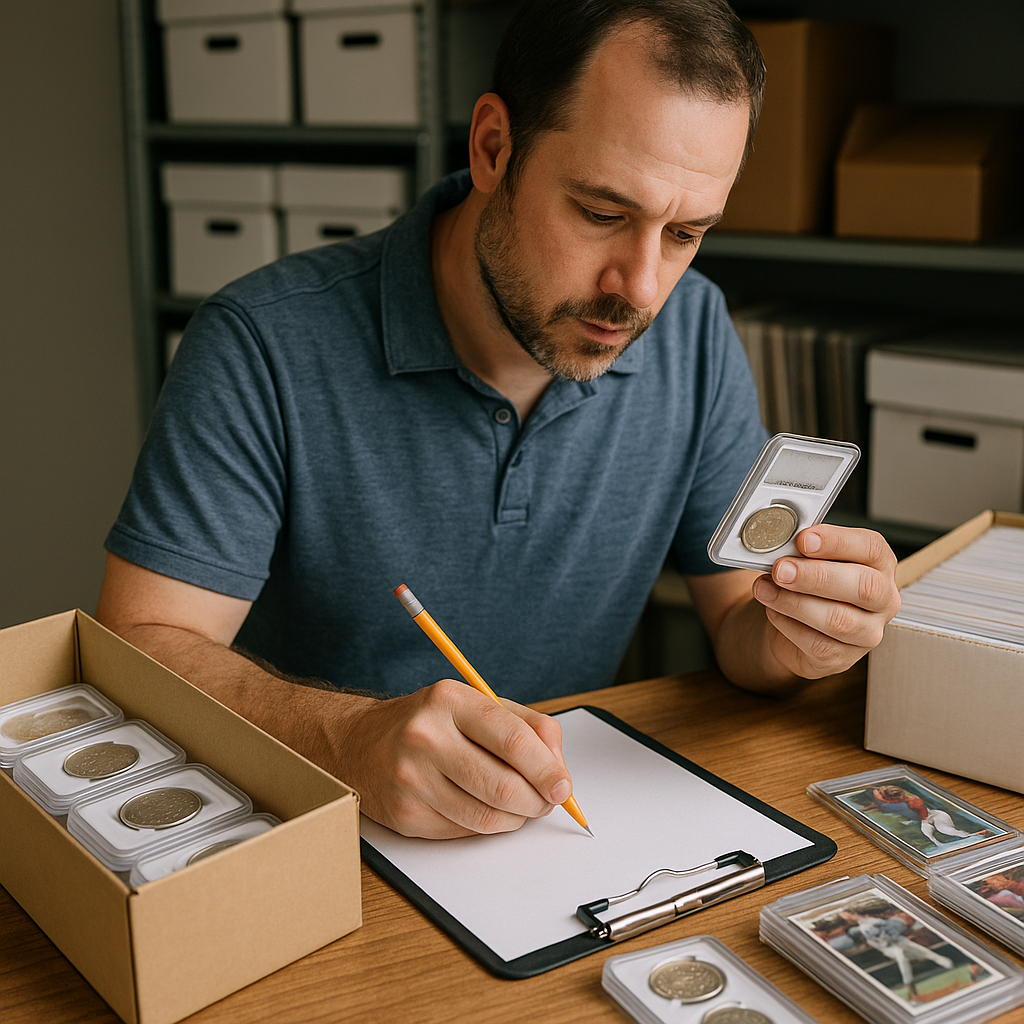
This sounds like a storage rant, but it's a tax slide. If your estate is big enough that federal estate tax is even a question, the collection can't just be valuable. It has to be administrable. And the weird part is that how you store and label everything can change what your heirs can prove about value and condition, which changes the confidence level in the numbers that end up on the estate paperwork.
I've seen two extremes. On one end, the museum-grade archive approach: everything is documented, photographed, and cross-referenced, but it's so precious that nobody wants to touch it. On the other end, the sellable box approach: items are physically ready to move (slabs in team bags, coins in labeled boxes, comics boarded and bagged), and the inventory makes it easy to hand an appraiser or auction house a clean scope. For heirs dealing with tax filings and deadlines, the second style tends to reduce mistakes.
Here are the small, hands-on moves that push you toward sellable without trashing the collection:
- Match labels to the market. If you collect coins by variety, put the variety on the label. If you collect cards by grade, lead with the grade and cert number. Box 3 isn't a category.
- Keep purchase records, but don't confuse cost with value. Receipts and invoices help with provenance and can help an appraiser understand what something is, yet fair market value for estate purposes is about what a willing buyer would pay at that time.
- Separate the high-value items physically. One small case for the pieces that would make an appraiser's eyebrows go up is easier than burying them across a room of long boxes and albums.
- Write down the selling friction. If something is expensive to move or hard to liquidate (a vintage pinball machine, a large art toy display, a safe full of silver), note that. Not as a gimmick to lower value, but because the executor needs to plan how it will be handled.
And yes, this is where families get tripped up by sentiment. Somebody will say, "Dad paid $2,000 for that," like it's a valuation method. Somebody else will say, "It can't be worth more than a few hundred." If you've left a collection that's physically organized, clearly labeled, and paired with a defensible inventory, you remove a lot of the oxygen from that argument. Your executor can focus on getting it appraised and reported correctly instead of playing detective.