
Three checks I use before paying collector prices: inspect condition closely, compare genuine sold prices, and verify the exact variant and accessories.
The 10x loupe check I do before I believe any grade
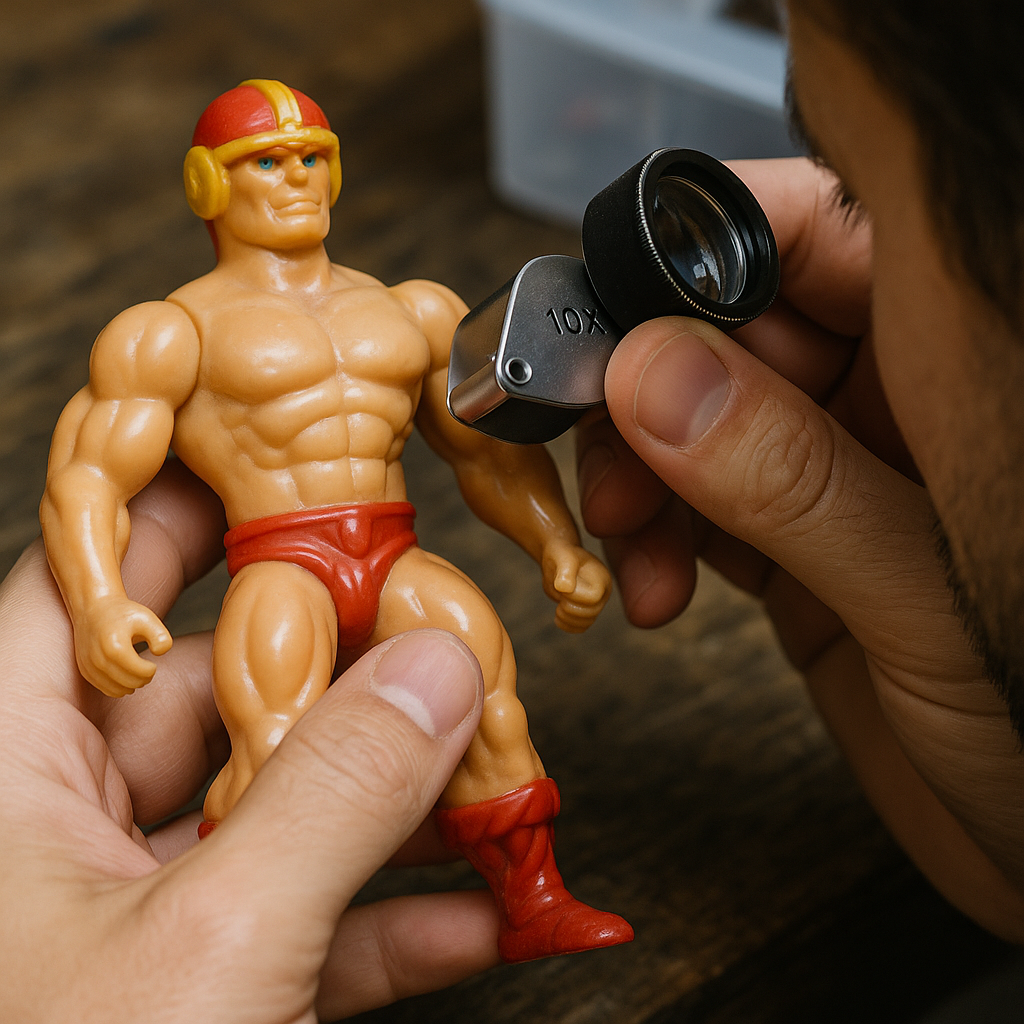
I keep a little 10x jeweler's loupe in the same pocket as my Mini Maglite. It feels ridiculous until you realize how many "mint" listings lean on lighting tricks. A loupe can reveal scratches, surface wear, paint flaws, residue, stress marks, and other details that seller photos may hide. Those clues can justify a closer inspection, but they do not prove that a toy was polished, restored, or altered. Manufacturing methods, plastic formulas, storage, and decades of handling can all change how a surface looks under magnification.
Then I look around the peg holes and joints for stress whitening, cracking, deformation, or other signs of strain. Stress whitening can indicate that plastic has been bent or stressed, but its appearance varies with the material and the amount of damage. On die-cast parts, I check edges for a soft rollover. A true sharp edge has that crisp line that almost looks like it was drawn with a pencil. A softened edge can point to wear or handling, although manufacturing differences can produce similar-looking edges. Stickers and decals are another tell. Under magnification, I look for differences in print quality, edge wear, adhesive residue, alignment, and surface aging. Replacement decals can differ from originals, but raised edges or visible printing dots are not universal tests, so I compare them with documented examples from the exact toy line.
Packaging is where people get cute. If I'm looking at a window box, I inspect the plastic window for fine, parallel scratches running in the same direction. Parallel scratches can come from repeated wiping or cleaning, although the exact cause may be impossible to confirm. A micro-scratchy window doesn't ruin a toy, but it does change what I'd pay if the seller is pricing it like a display-grade piece. For blister packs, I inspect the seal for lifting, mismatched adhesive, unusual glue residue, disturbed card stock, or other signs of tampering. Age alone does not guarantee ambering, and no single visual clue proves a reseal. Professional grading companies treat evidence of re-gluing and other restoration as significant issues. None of this is a morality play. It just changes the number. The loupe is how I decide whether I'm buying condition or buying a story.
Stop reading asking prices: build a sold-comps ladder
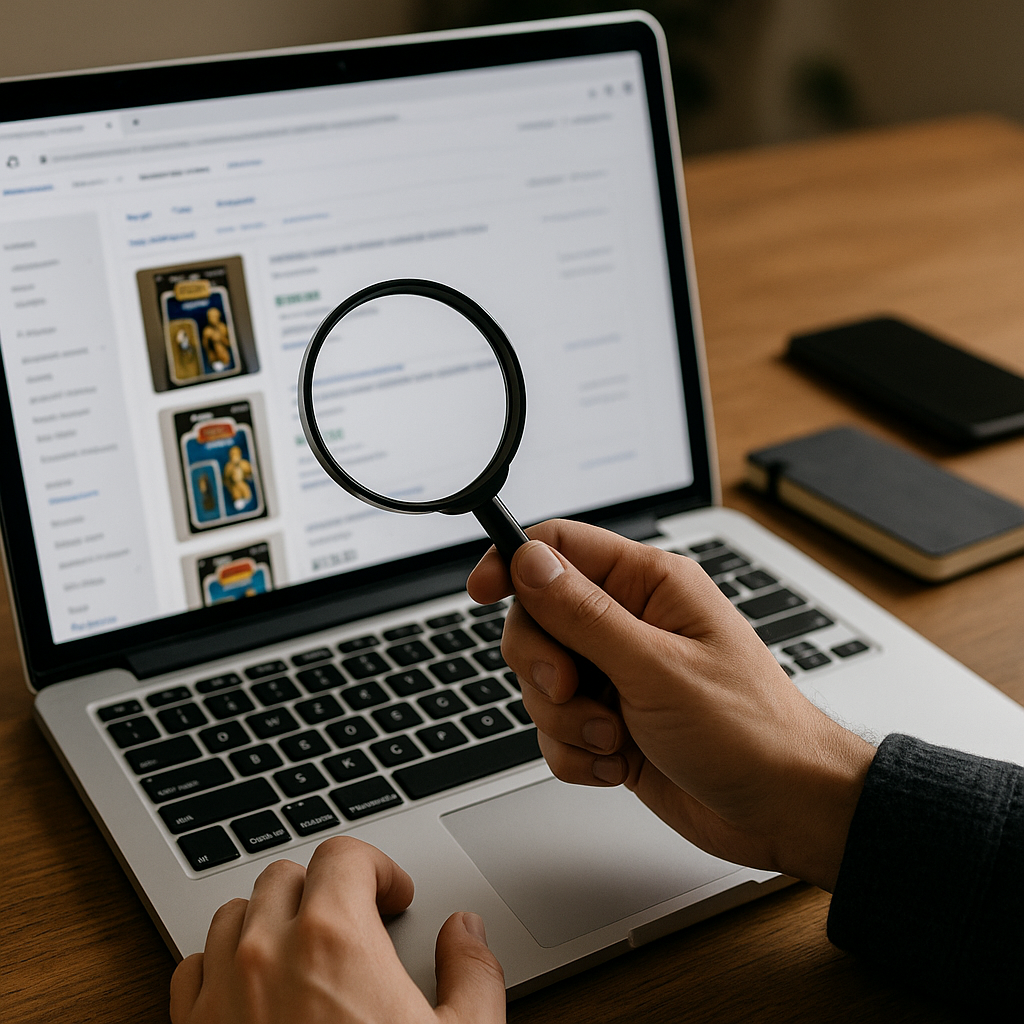
When I'm valuing a rare piece, I act like the asking price doesn't exist. Not because sellers are dishonest, but because the highest prices are often what didn't sell. I start with eBay sold listings and, when available, eBay Product Research, formerly Terapeak, and I build a ladder: low, middle, high. The trick is that each rung has to be the same thing. Not "close enough," not the same character, the same run, same variant, same condition tier. I keep a notes app list of the exact search strings that worked, because the next time you search, you will forget whether you used a hyphen, a space, or the weird early-2000s abbreviation collectors insist on.
Here's what I filter for every single time. First, sold only. Second, exclude lots unless I'm valuing a lot. Third, sort by most recent and look for clustering. If everything sold in a narrow band and one result is twice as high, I inspect that listing more closely. Often, the outlier has something extra: a hard-to-find accessory, an unusually clean box, a signed card, or professional grading. If I'm not buying that same bundle of attributes, I don't let that sale set my expectation. I also watch shipping. A price that looks high sometimes includes $30 to $60 in shipping because it's a big box or an international sale. If I'm comparing local pickup deals to shipped sales, I adjust my mental number, or I end up negotiating in fantasy currency.
Then I double-check against another marketplace. For toys, that might mean WorthPoint (if you're already a subscriber), completed listings on Mercari, or even auction archives for higher-end stuff. I'm not hunting a single true price. I'm trying to see the spread and what drives it. Condition can be a major price driver, alongside completeness, rarity, variant, provenance, packaging, and recent demand. A movie announcement, an anniversary drop, or a viral TikTok can spike demand for a month, and then it cools. I don't pretend I can predict hype. I just mark the date range of the comps I'm using, and I refuse to average in ancient sales from five years ago unless nothing else exists.
Once I have the ladder, negotiating gets calmer. I'm not arguing about the seller's number. I'm pointing to what buyers recently paid for comparable examples in similar condition. If the seller has a nicer example than my mid rung, great, we can talk about why it deserves the high rung. If it has missing parts, we slide down to the low rung without drama. It's boring work, but boring is what keeps you from paying collector-tax when you're tired and excited.
Value the parts first, then the toy
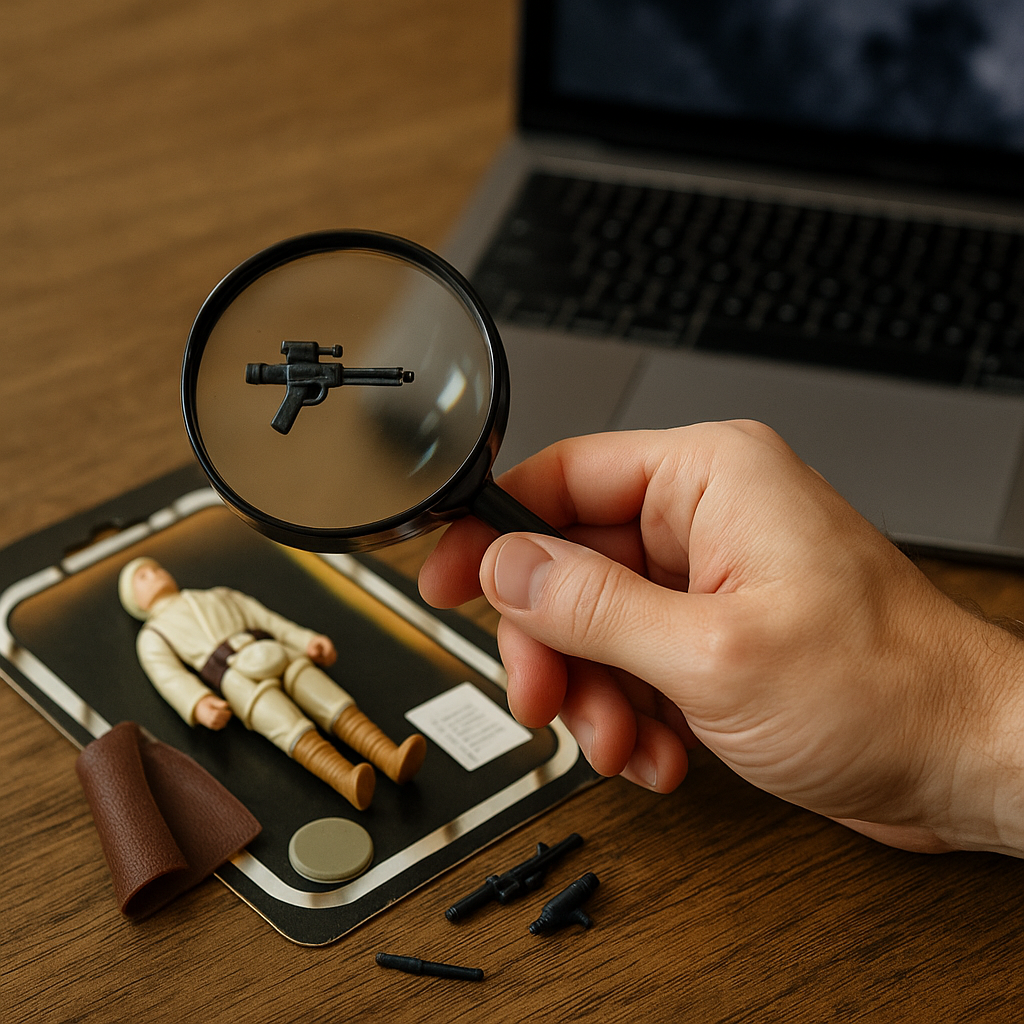
If you only learn one habit, make it this: price the accessories and inserts before you price the figure. People obsess over the toy's face paint (fair), then shrug at the tiny parts (expensive mistake). I've seen a plain-looking figure command substantially more because it included the correct belt, the right accessory variant, or a hard-to-find original insert. When I'm evaluating a listing, I open a checklist, and I go piece by piece: weapon, stand, cape, helmet, cardback, instructions, mail-away flyer, even the twist ties if it's sealed and the buyer cares about that level of completeness.
I also get picky about variants, because variants are the silent argument behind a lot of pricing fights. Two toys can look identical in a phone photo and still be different runs. On older lines, it might be the country of manufacture stamped on the back. On later stuff, it can be a date code, a different copyright line, or a slightly different paint mask. I don't make up an encyclopedic database in my head. I pick two or three known tells for the line I'm buying and ask for close-ups of those exact spots. Back stamp. Accessory mold mark. Cardback SKU. If the seller can't provide them, I assume it's the more common version until proven otherwise, and I value it that way.
Here's the practical reason: original accessories can account for a substantial part of a collectible's value. Complete examples may also be easier to sell, although demand varies sharply by toy line and accessory. Missing parts drag you into long Q&A threads with buyers who want measurements, extra photos, and promises about fit. And if you think you'll just replace the missing piece later, you might, but you'll pay for it. Scarce original accessories can be surprisingly expensive because collectors need them to complete otherwise incomplete sets. That's why I write down what I'm missing and total the replacement cost of the parts alone using sold comps. If the figure is $120 but it's missing a $45 accessory, it's not a $120 figure. It's a figure plus a future headache, and I price it like that.
When I do find a complete example, I still confirm the parts are original to that release. Repros exist for popular weapons and paper inserts, and some are good enough to fool casual buyers. I don't pretend I can authenticate everything from a photo, and I won't tell you a home inspection can guarantee it. My rule is simple: if authenticity is a major part of the value, I only buy from a seller with a track record and photos showing wear that makes sense. Brand-new-looking paper in a worn box doesn't automatically mean it's fake, but it does mean I slow down and ask more questions before I move money.