
Here are three skills that helped me turn a pile of listings, comps, and inspection notes into a better offer.
The Underwriting Spreadsheet That Survived My First Offer

I came into my first buying season with the classic career-pivot problem: I could talk myself into anything. A place would look clean on Zillow, the agent would say "strong rental demand," and my brain would fill in the rest. The only thing that slowed me down (in a good way) was building a one-page underwriting sheet that forced the same inputs every time.
Here is what I kept on it, because these are the numbers that move when reality shows up: purchase price, down payment, interest rate, estimated taxes, insurance, and a line for PMI if my conventional loan required it. Then I added the stuff Zillow tends to blur: HOA dues (if any), a realistic maintenance reserve, and vacancy. I used a plain rent estimate from comps I could point to. If I couldn't explain where the rent number came from in one sentence, it didn't go in the cell.
The skill that carried over most directly from my previous work was sensitivity checking. I ran three quick scenarios: the rate up 0.5%, rent down 5%, and property taxes up 10%. If the deal only worked in the prettiest version of the future, I didn't want it. And because I had the sheet, my conversations changed. Instead of "can we make this work," I was asking my lender and agent specific questions like, "If the property taxes change after the sale, what could that do to my monthly payment?" It's amazing how fast the fog clears when you can point to one cell and say, "This is the hinge."
Comps: How I Learned to Read the Neighborhood
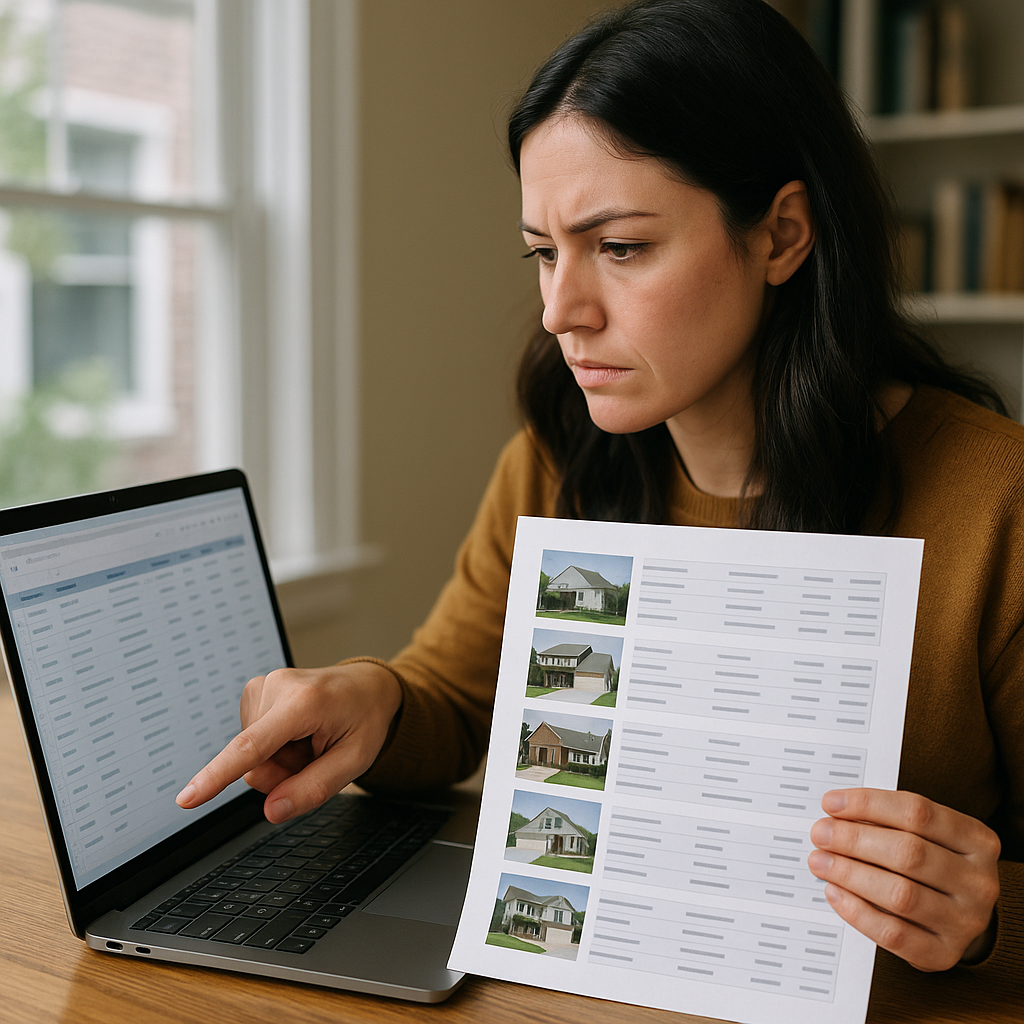
I didn't understand how much of real estate talk is just people defending a number until I started pulling comps the way an analyst would. Browsing is emotional. Comping is petty and specific.
My first pass was embarrassingly broad. I was mixing a renovated place with quartz and new HVAC against a house with original 90s cabinets and a roof that looked tired in the satellite view. That was when I saw how much of the skill carried over: normalize the inputs. In my notes, I literally wrote two columns: "stuff a buyer can finance" and "stuff a buyer pays cash for later." When I compared homes, I tried to mentally strip away furniture staging and Instagram paint colors and focus on the boring, expensive systems.
At open houses, I carried a simple checklist on my phone and used it like a field interview. What year is the roof? How old is the water heater? Any knob-and-tube, aluminum wiring, or a recent electrical panel upgrade? Does the basement smell damp, and is there a dehumidifier running in the corner? None of that is glamorous, but it is exactly the stuff that changes your insurance quote, your inspection negotiation leverage, and whether the place turns into a money pit.
Then I would go home and sanity-check the comps against days on market and price reductions. If the nicest, most updated comp sat for 45 days and cut its price twice, that gave me another signal about where buyers were pushing back. That made the process feel much less intimidating. Once I could say, "This is the comp set and this is the range," making an offer stopped feeling like jumping off a roof and started feeling like filling out a form.
The Repair Addendum Is a Negotiation Document

The first inspection report I ever saw was 60 pages of things that needed attention. The temptation is to forward the whole thing and say, Fix it. That is how you learn, quickly, that a seller is more likely to respond to a specific request than a demand to fix everything. That was another place where my previous work helped because it felt exactly like writing a tight scope of work in a project job: you don't dump raw notes on someone and hope they translate it into action.
After the inspection, I made a repair request list that was short on purpose. I kept the request focused on the safety issues, water intrusion, and major systems that mattered most to me. When I asked for a credit, I attached a screenshot of a real estimate range from a licensed contractor I'd called for a ballpark.
I also learned to separate do it from pay for it. If a seller offered to fix something, I'd rather take a credit and choose the contractor myself, especially for plumbing and electrical. A rushed pre-close fix can leave you wondering whether the underlying problem was actually addressed. A seller credit can be useful, but it has to fit the loan program and the buyer's eligible closing costs, so I ran it through my lender before treating it as part of the negotiation.
One detail I did not expect: tone matters, even in a formal document. I kept my language flat and factual. "Active leak under kitchen sink" reads better than shoddy plumbing. Then, if the seller said no, I had a decision tree ready: accept, counter, or walk. That part felt cold the first time. It got easier when I realized the same discipline I used at work could keep me from making an expensive decision just because I didn't want to be difficult.