
Three penthouse resale clues I now look for on every tour: elevator setup, terrace condition, and the HOA's reserve planning.
Why private elevator access can matter at resale
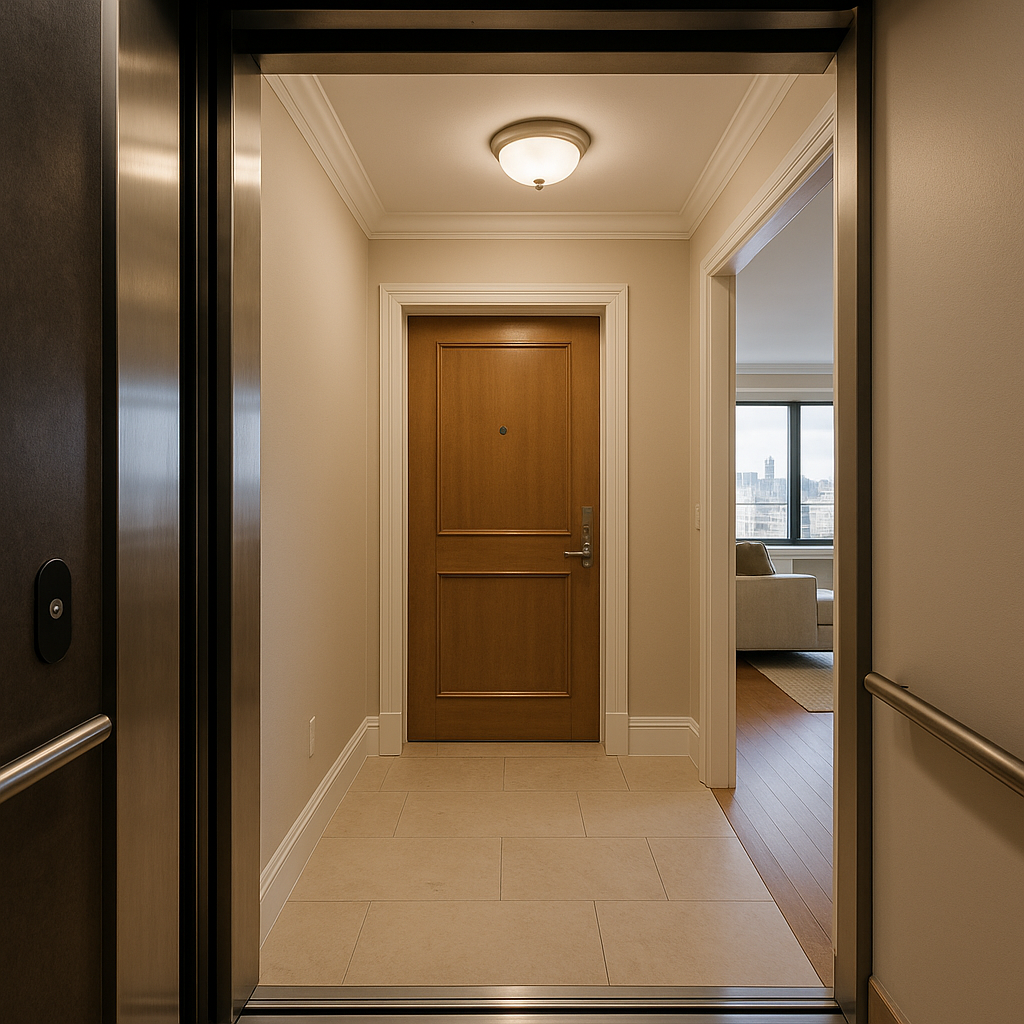
I started paying closer attention to elevator access after watching two nearly identical top-floor units sell for very different prices in the same building. One had a keyed, direct-to-unit elevator that opened into a small, finished vestibule with a proper door. The other had a "private" elevator that opened into a shared hallway with a flimsy pocket door and a straight line of sight to the living room. On paper, both were private access. In person, one felt like a hotel suite, and the other felt like you were stepping off a service lift.
When I tour now, I spend the first two minutes doing nothing glamorous: I stand where a guest would stand when the elevator doors open. What do you see? Do you have a moment to set down a bag, take off a coat, and close a door before the home is on display? Is there acoustic separation, or can you hear the chime and hallway chatter from inside the unit? Details such as privacy, noise, elevator traffic, and the condition of common areas can influence how buyers perceive a luxury unit. However, their effect on the final sale price will vary by building and market.
Ask the agent to walk you through access modes, not just amenities. Is it a fob, a key, a coded panel, or an attendant-controlled call? Does the elevator serve only a few residences, or does it also handle traffic from shared amenity floors? If there are two elevators, is one designated for moves and deliveries so the passenger cab sees less heavy use? These details can help distinguish genuinely private elevator access from an arrangement that sounds more exclusive in the listing than it feels during a showing.
What the terrace edge can reveal about future repairs
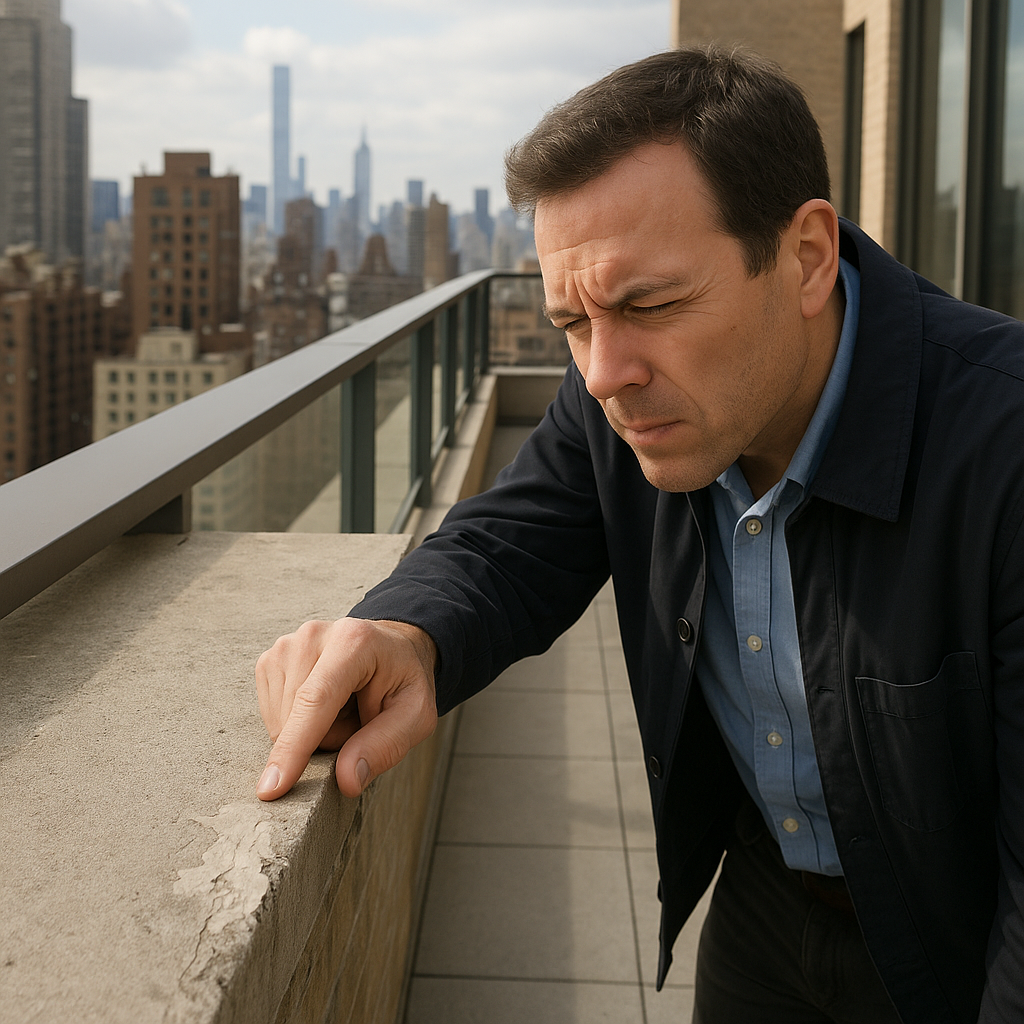
Outdoor square footage gets plenty of attention, but the condition of the terrace can matter just as much as its size. Buyers concerned about resale value may also examine the perimeter for signs of deterioration or repairs that deserve further investigation.
Here's what I look at during a showing. First, the guardrail system. Is it a modern glass railing with clean stanchions, or a dated metal rail with visible corrosion at fasteners? Second, the door thresholds and drains. Repeated coatings or repairs around thresholds can justify asking whether the building has documented leaks, waterproofing work, or other maintenance issues. Third, the parapet and coping. Visible deterioration around the parapet or coping is another reason to ask about previous repairs and planned maintenance.
I don't pretend to diagnose a facade from a single showing, and I wouldn't trust anyone who says they can. You can treat the terrace edge as a due diligence trigger. If the exterior shows visible wear, ask for recent board minutes and any relevant façade inspection reports available to owners or prospective buyers. In New York City, buildings taller than six stories generally fall under the Façade Inspection and Safety Program, which requires exterior walls and appurtenances to be inspected every five years. Other jurisdictions have different rules. Major façade or waterproofing work can make an otherwise desirable terrace less convenient and potentially more expensive to own, so pending exterior projects deserve careful review. Pending façade work may also affect how and when the terrace can be used.
Why HOA reserves deserve a closer look

I've sat at my kitchen counter with a stack of condo docs and a highlighter, and the thing that keeps jumping out isn't a single number. I pay more attention to the pattern over time. A reserve study and association budget can show whether major common-area repairs have been identified and how the association plans to fund them. Funding standards and reserve-study requirements vary by state. Large unexpected expenses or repeatedly deferred projects can raise questions about the association's financial planning. Sharp increases in dues or unexpected assessments are reasons to examine whether major projects were anticipated and adequately funded.
Buying a penthouse also means taking on an interest in the condition and financial health of the building's shared systems, including the elevators, roof, lobby, and mechanical equipment. The condition of shared spaces can also influence a buyer's impression of the property during a showing. A worn elevator cab or stalled lobby renovation can prompt questions about maintenance priorities and building management.
My practical method is simple and a little annoying: I ask for the last two years of budgets, the most recent reserve study (if the building has one), and the latest annual meeting minutes. Then I scan for repeated references to major expenses such as the roof, façade, elevators, HVAC systems, waterproofing, and window walls. Repeated discussion of major projects without an identified funding plan is grounds to ask the association or a qualified professional about expected costs and potential assessments. I also look at how the board communicates. Board minutes can provide useful context about planned projects, disputes, assessments, and unresolved maintenance issues. However, writing style alone is not a reliable measure of how well an association is governed.
A penthouse can be beautifully maintained while the surrounding building faces expensive repairs or deferred maintenance. Reviewing both the unit and the association's finances can provide a fuller picture before buying.