
Three curation moves I use: a provenance packet, a light-and-condition routine, and a resale-spreadsheet that doesn't flatter you.
Build a provenance packet that survives a sale
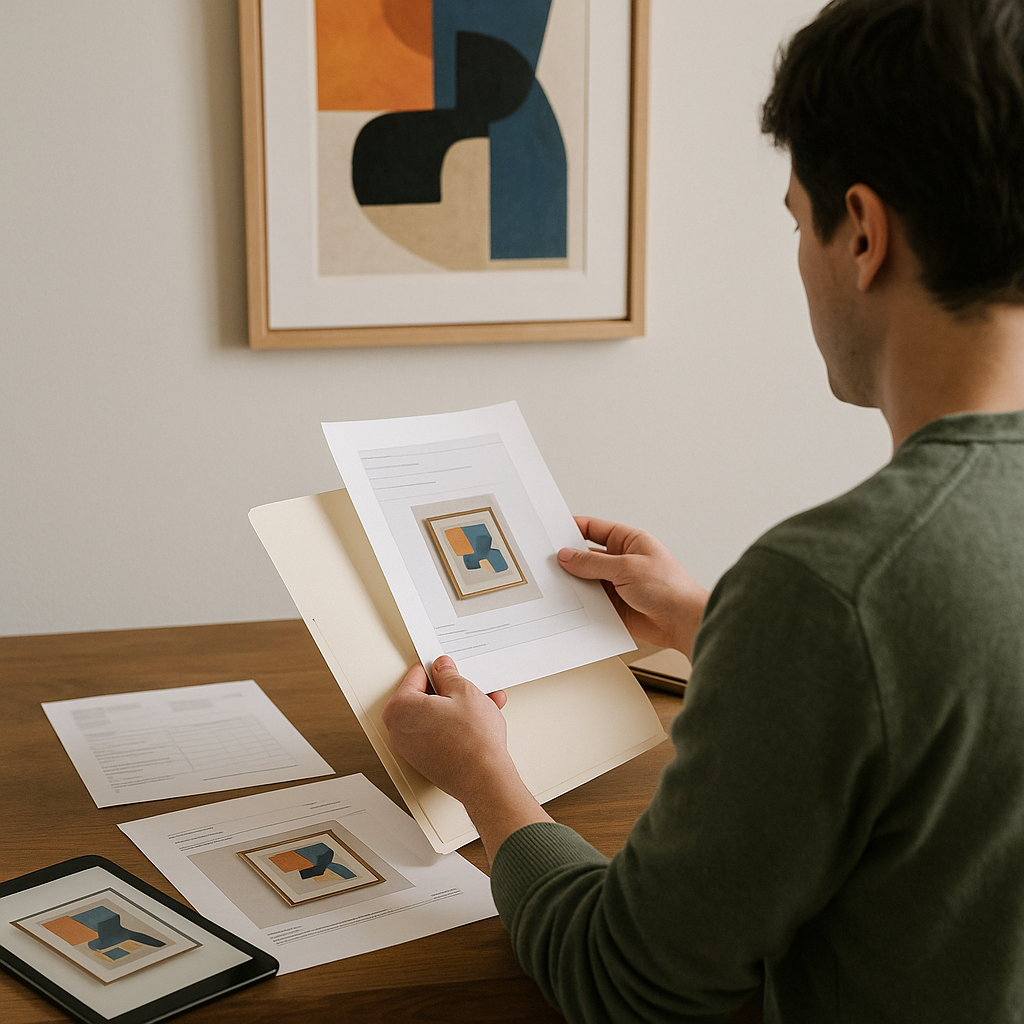
I learned this the annoying way: When I started organizing my collection for insurance and financial records, I realized how quickly an undocumented purchase can become a headache. Receipts, appraisals, photographs, and ownership records matter when a piece is insured, appraised, sold, or potentially used as collateral. So now, every time I buy, I build what I call an ownership-and-provenance file. Not a fancy binder, just a tight set of files I can hand to an attorney, an insurer, or a consignor without rummaging through email like a raccoon.
What goes in it is boring on purpose: the invoice (with the work's title, year, medium, dimensions), proof of payment, the dealer or gallery's terms, any condition report, and every line of communication that answers the obvious questions. If it came from an auction, I keep the lot page PDF and the buyer's premium breakdown. If it came from a private sale, I want an actual bill of sale, not a text thread that ends with "Sent!". I also snap high-res photos the day it arrives, front and back, plus signatures, edition numbers, and any labels or stamps. Those photos can also be useful for insurance records and when comparing a piece with reference images, signatures, labels, or other identifying marks.
The point isn't to turn your living room into a warehouse. It's to make you faster and calmer when someone serious asks, "What is it, exactly, and can you document it?" Good records make a collection easier to insure, research, appraise, and eventually transfer or sell.
Lighting, placement, and the quiet enemy: UV
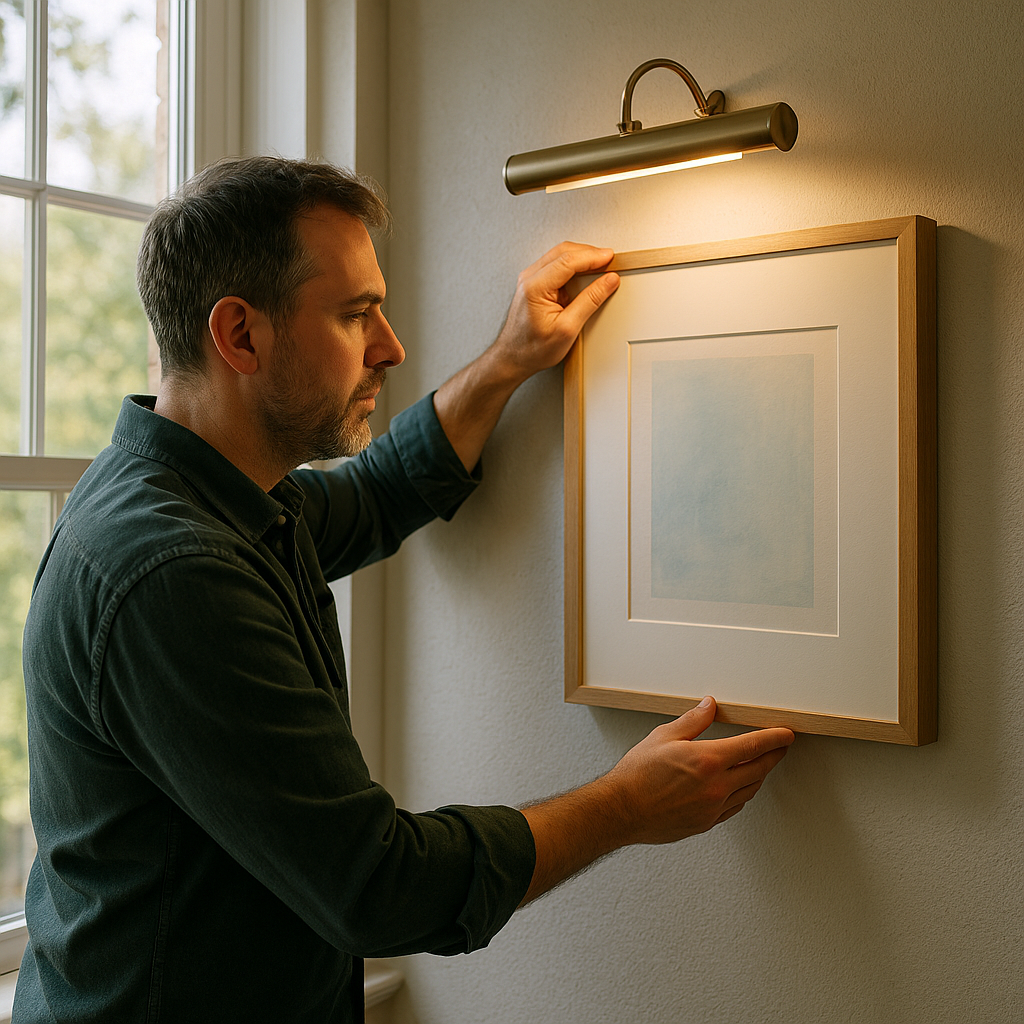
Everyone loves to talk about emerging artists and auction comps. The unsexy truth is that preventable light damage can affect both an artwork's condition and its appearance. If you're buying art with even a side-eye toward holding value, you have to think like a conservator for ten minutes.
I do a quick placement audit before anything gets a permanent hook. Paper works (prints, drawings, anything on thin stock) are the most finicky in my house. Direct sun is a no, but so is strong ambient light that hits the same corner every afternoon. If you want the piece in a bright room, conservation-minded framing can help: consider suitable archival matting and UV-filtering glazing, while still limiting the artwork's overall exposure to light. I won't pretend that a home setup can ensure preservation, but it absolutely can prevent obvious damage. I also avoid hanging above heat sources. A vent that repeatedly exposes a work to warm, dry air can contribute to damaging changes in temperature and relative humidity. Bathrooms can be risky locations for vulnerable works because repeated humidity fluctuations may cause paper to expand, cockle, or become more susceptible to mold.
For paintings, I pay attention to standoffs and airflow. A canvas pressed flat against a damp exterior wall can absorb moisture over time. I use small bumpers so the frame isn't sealed to the wall, and I keep a little space from corners where condensation loves to show up. For artificial lighting, I keep exposure modest and avoid directing unnecessary heat or intense light at the surface. Light damage is cumulative, so the amount and duration of illumination matter more than simply choosing a particular bulb.
These precautions can reduce preventable deterioration, which may matter later when a conservator, insurer, appraiser, gallery, or auction house assesses the work's condition.
Track the real cost of resale

If you want to track your collection with resale in mind, you can't rely on the way people talk about prices at dinner parties. You need a spreadsheet that is mildly disappointing. Mine has three columns that do most of the work: what I paid all-in, what a plausible resale looks like, and what I would net after the market takes its bite.
All-in means everything: hammer price plus buyer's premium if it was an auction, sales tax or use tax where applicable, shipping, packing, and framing if the piece basically required it to be presentable. Framing can also represent a meaningful percentage of the total purchase cost, so I include it when it is necessary to display or protect the work. That changes the math, so it belongs in the same row as the art.
For plausible resale, I don't cherry-pick the highest public result. I compare several relevant auction results to asking prices for genuinely comparable works, while keeping in mind that a dealer's asking price is not the same as a completed sale. If I'm buying living artists, I also note whether the work is in the primary market (gallery) or the secondary market (resale), because the liquidity profile differs. Then I apply friction. Auction seller's commission can be painful, and even a private sale has costs: authentication, photography, crating, shipping, and sometimes a consignment fee. When I build the net number, I expect to pay for proper packing and insured transport. I don't want a fantasy exit that depends on someone driving it across town in the back of an SUV.
Seeing the likely net proceeds can make future purchases more selective and temper unrealistic expectations about appreciation. The spreadsheet doesn't kill the joy. It keeps the joy from turning into an expensive pile of surprises.